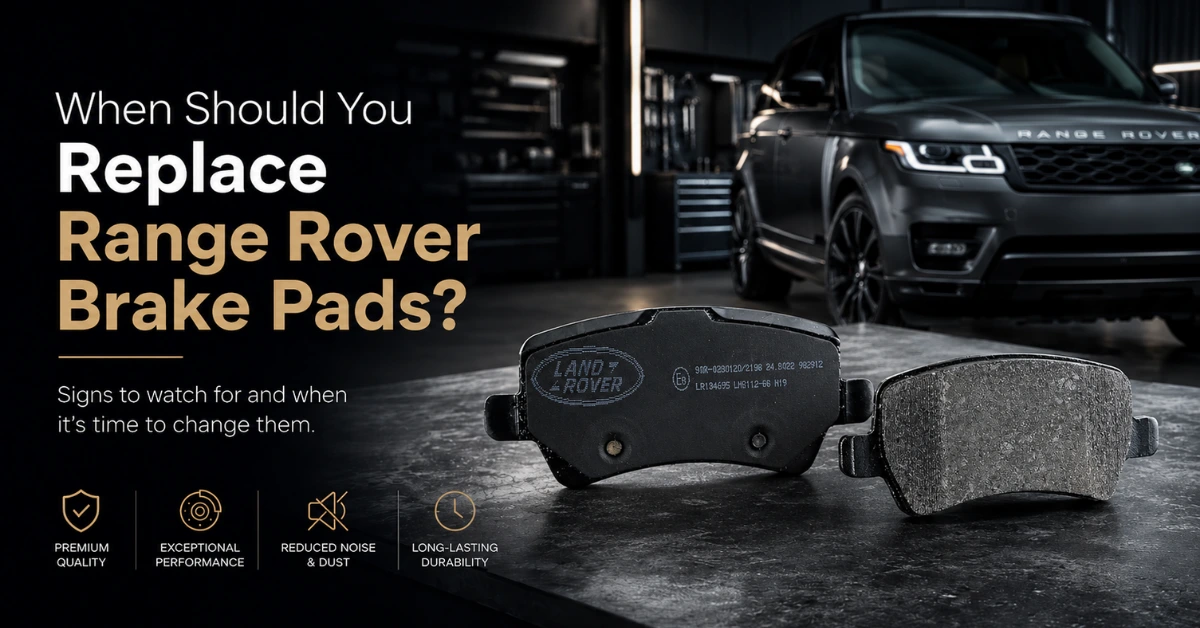
Brake pads are one of the most important safety components in a Range Rover. They create the friction needed to slow down and stop the vehicle. Over time, the friction material wears down and the brake pads need to be replaced.
Knowing the warning signs can help you replace them before they affect braking performance or damage other braking components.
How Long Do Range Rover Brake Pads Last?
There is no fixed mileage for replacing Range Rover brake pads. Their lifespan depends on driving style, traffic conditions, vehicle usage, and the specific Range Rover model.
As a general guide, brake pads may last around 30,000 to 70,000 km, but they can wear sooner with frequent city driving or heavy braking.
Regular inspection is more reliable than depending only on mileage.
Signs Your Range Rover Brake Pads Need Replacement
Below are few things that you might notice, when it is time to replace the brake pads.
Squeaking or Screeching
A high-pitched squeaking sound when braking can indicate that the brake pads are getting worn. Some brake pads have wear indicators that produce a noise when replacement is approaching.
Grinding Noise
A grinding or metal-on-metal sound is a serious warning sign. It can mean the brake pad material has worn away and the backing plate is contacting the brake disc.
If you hear grinding, have the brakes inspected immediately.
Brake Warning Light
Some Range Rover models have brake pad wear sensors. If a brake warning message appears, the brake system should be checked to determine whether the pads need replacement.
Longer Stopping Distance
If your Range Rover takes longer than usual to stop, the brake system should be inspected. Worn brake pads can contribute to reduced braking performance, although other brake components can also cause this problem.
Thin Brake Pads
During a brake inspection, the remaining thickness of the brake pad can be checked. If the friction material is very thin, replacement is usually necessary.
What Causes Range Rover Brake Pads to Wear Faster?
Brake pad life can be shortened by:
- Frequent stop-and-go city driving
- Hard or aggressive braking
- Heavy vehicle loads
- Frequent driving on steep roads
- Brake system problems such as a sticking caliper
Do Brake Discs Need to Be Replaced Too?
Not always. Brake discs should be inspected whenever brake pads are replaced.
If the discs are excessively worn, damaged, deeply scored, or below the required thickness, they may also need replacement. If they are still within specification, replacing the brake pads may be enough.
How to Choose the Correct Range Rover Brake Pads
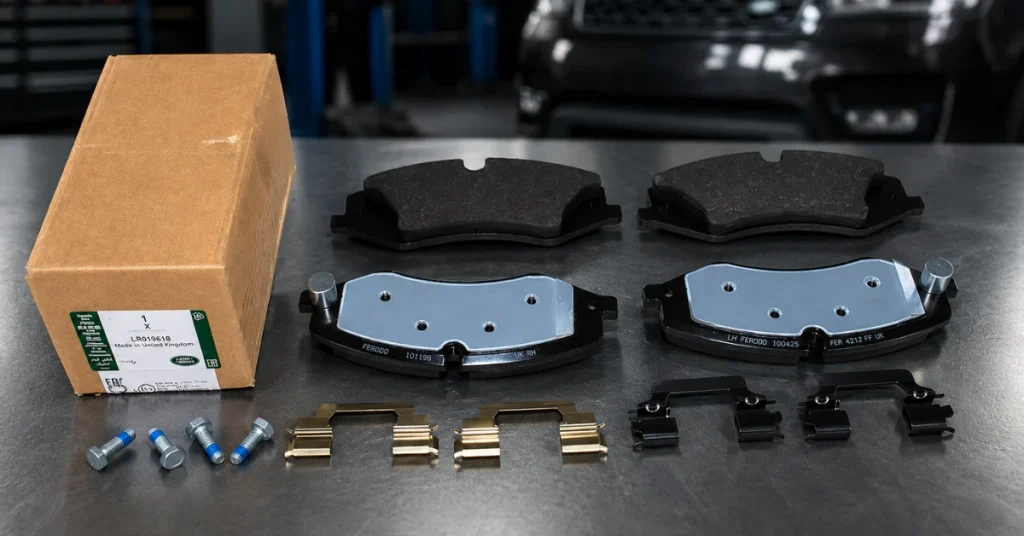
Range Rover brake pads vary depending on the model, year, engine, braking system, and whether they are for the front or rear axle.
When buying replacement pads, check:
- Range Rover model and year
- Front or rear brake pads
- Original part number
- Vehicle details or VIN, when required
Using the correct part number is one of the best ways to identify the right replacement.
When Should You Replace Them?
Have your Range Rover brake pads inspected if you notice:
- Squeaking or unusual brake noise
- Grinding while braking
- Brake warning lights
- Reduced braking performance
- Longer stopping distance
- Very thin brake pad material
Do not wait until the pads are completely worn. Replacing them at the right time can help protect the brake discs and maintain safe braking performance.
Get the Right Range Rover Brake Pads
Looking for Range Rover brake pads in the UAE? AlSaqer AlJareh Auto New Spare Parts supplies Range Rover spare parts and can help you identify the correct brake pads using your vehicle details or original part number.
Contact AlSaqer AlJareh Auto New Spare Parts today to check availability and find the right Range Rover brake pads for your vehicle.